
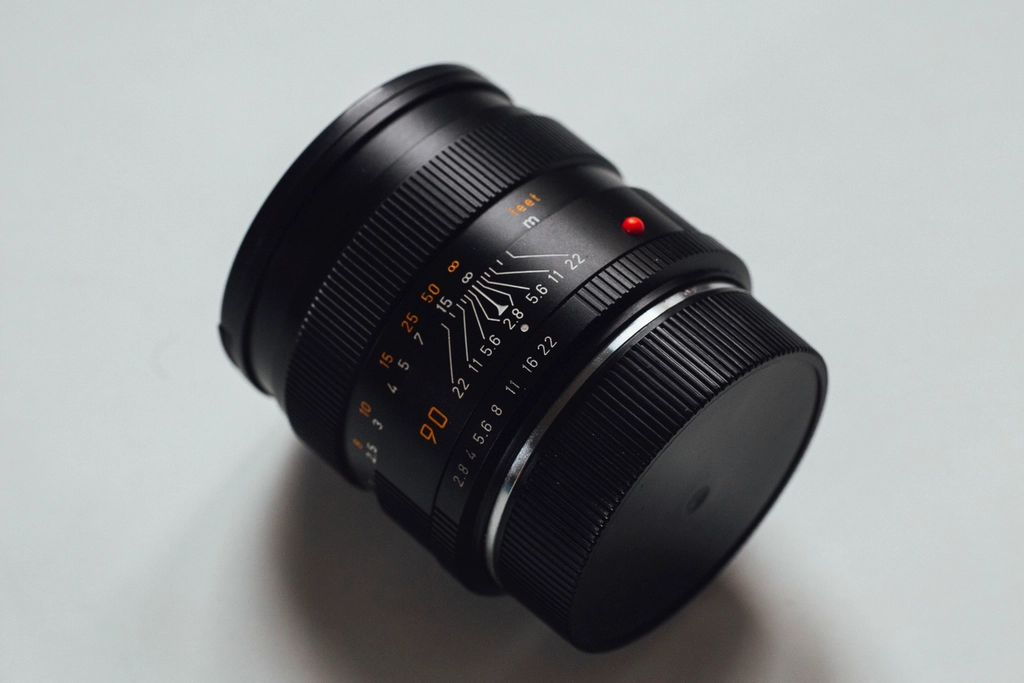
Two bodies, two straps, one confused person
For about three years I carried two cameras. One on each shoulder, or one on a shoulder and one across the body, depending on how much I had thought about it that morning. A wider lens on one, something longer on the other. The logic was airtight, or seemed to be at the time: I would never be caught with the wrong focal length, and I would never lose a moment to changing lenses.
I stopped about eighteen months ago. Not dramatically, not as a principled stand. I left one at home one Saturday because the strap needed fixing, and then I did it again the next weekend, and then I noticed I had not gone back.
This is not an argument that you should carry one camera. Plenty of people I admire carry two and their work is better than mine. It is an account of what changed for me, which turned out to be more than I expected and almost none of it about focal length.
The problem was never the weight
Everybody talks about weight, and the weight is real, but it is not what got me. On a two-hour walk the weight is an annoyance. It is not a reason.
What got me was a specific hesitation I started to notice. I would see something forming, some arrangement of people and light that was about to become a picture, and there would be this half-second where I decided which camera. Half a second is nothing. Except it is not nothing, because the deciding pulled me out of looking. For that half second I was thinking about equipment, and the thing I was thinking about equipment instead of was the picture.
Worse, the decision was often wrong, and I knew it was wrong immediately, and then I would raise the other one and by then the thing had resolved itself into people just walking. I have a folder of near-misses from that period that I do not open much.
The two-camera setup had solved a problem I did not have and created one I did. I was almost never in a situation where the correct response was a completely different focal length. I was frequently in a situation where the correct response was to already be looking through the viewfinder.
What one camera does to your feet
The immediate effect, and the one nobody warned me about, is that you move differently.
With one lens, if the framing is wrong, the only thing you can change is where you are standing. So you walk. You step forward, you crouch, you back up onto a curb, you go around to the other side. This sounds obvious and even a little precious when written down, but the physical difference is enormous. I used to solve compositions with my hands. Now I solve them with my legs, and the solutions are different.
They are different because moving changes more than magnification. Step three feet closer and the relationship between the foreground and the background shifts, the person’s face turns slightly toward you or away, the light on them changes because you have moved relative to the window. Zooming from a fixed spot changes none of that. It just crops.
I have also become much more aware of how close I actually am to people. When I could reach out with a longer lens I was, without admitting it to myself, keeping a certain distance. Now if I want somebody in the frame at any size, I have to go over there. That has been uncomfortable and it has been good for the work. The pictures have a different temperature. You can feel that the person making them was standing in the scene rather than observing it from the far side of the street.
The moments I actually lost
I want to be fair to the setup I abandoned, so here is the honest ledger of what going down to one camera cost me.
I miss things at distance. There was an afternoon in the spring at a small parade downtown where a man in a folding chair on the far sidewalk fell asleep in the exact center of all the commotion, chin on his chest, completely at peace, and I could not get across the street. With the longer lens I would have had that frame. I do not have it. I think about it more often than a reasonable person would.
I also lost a certain kind of coverage. If I am somewhere for one day and one day only and I need to come back with a range of pictures, two bodies is genuinely better. When my sister asked me to photograph a family gathering, I borrowed a second body for the day and it was the right call, because that was a job with requirements, not a walk with intentions.
So the real answer is that one camera is not better. One camera is better for the kind of photography I want to be doing, which is the slow, uncertain, walking-around kind where I am not accountable to anybody for what I bring back.
Constraint is not a virtue by itself
There is a whole genre of writing about limitation as some kind of moral good, and I want to be careful not to slide into it. Limiting yourself is not automatically clarifying. Plenty of constraints just make things harder for no return. If I decided to only photograph on Tuesdays, that would be a constraint and it would be stupid.
The reason this particular constraint worked is that it removed a decision that was happening at exactly the wrong moment. It did not restrict what I could photograph. It restricted what I had to think about while photographing. Those are very different kinds of limitation and they are constantly confused with each other.
Here is a test I have started applying when I am tempted to add something to what I carry. Does this thing get used during the walk, or before and after it? A second body, a bag of filters, a set of extra batteries beyond one spare: these all get used during. They all introduce a moment where I stop looking and start managing. A thing that gets used before I leave the house or after I get home is free. A thing that gets used mid-walk has a cost that does not appear on any spec sheet.
What I carry now, and why it barely matters
One body, one lens, one spare battery in the left pocket, a card in the right. I do not bring a bag anymore for ordinary walks, and losing the bag might have mattered more than losing the second body. A bag is a place to put things, which means a bag is an invitation to bring things, which means a bag is a small ongoing conversation with yourself about whether to swap something.
What I notice most is the quiet. Not literal quiet. Mental quiet. On a good walk now there is a long stretch where I am not thinking about the camera at all. It is just an extension of the hand, and my attention is entirely out there, on the thing in front of me. That state used to happen maybe twenty minutes into a walk. Now it happens in the first five.
I got there because I stopped giving myself something to decide. The camera became a fact rather than an option, and facts are restful in a way options are not.
What I would say to somebody deciding
If you carry two and it is working, keep carrying two. This is not a prescription. But if you have a nagging sense that you are missing things and you cannot figure out why, it is worth paying close attention to the half-second before you raise the camera. That half-second is where a lot of pictures die, and it is very hard to notice because it feels like nothing.
Spend a month with one. Not a weekend, a month, because the first two weeks are just frustration and the frustration is not information. Somewhere in week three the walking starts, and once the walking starts you will know whether this is for you.
The parade sleeper is still the one that stings. I have made my peace with him. He is the price of everything else, and on balance I think the trade was good, and I would probably say that even if it were not, because at some point you have to stop rearranging the setup and go take some pictures.