
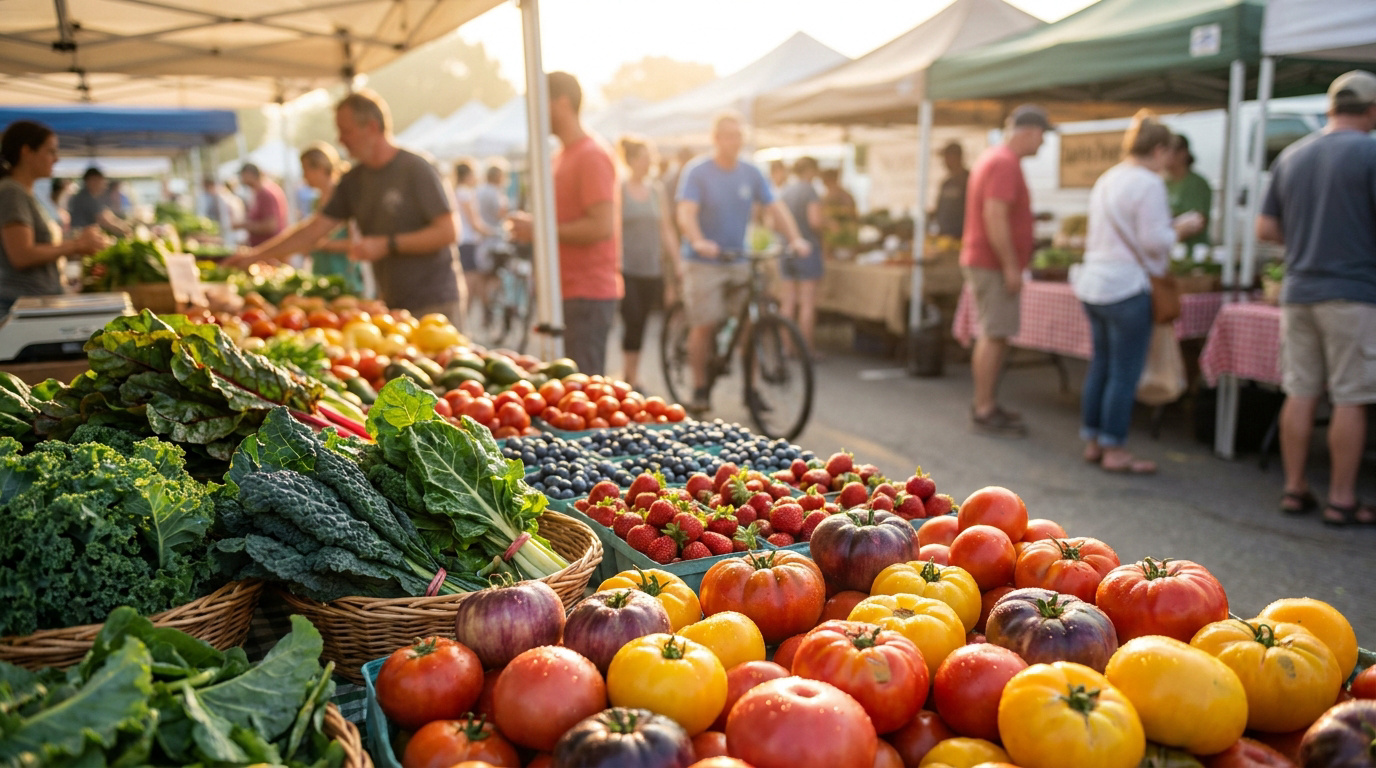
Key takeaway: Mastering farmers market photography requires balancing technical precision with ethical engagement. Use golden hour side-lighting and reflectors to highlight produce textures, while employing fast shutter speeds above 1/500s to freeze bustling transactions. By isolating subjects with wide apertures and building trust with vendors, photographers capture authentic narratives that transform chaotic local commerce into vibrant, professional visual stories.
Morning light hits the dew on leafy greens at dawn, creating a natural sparkle that disappears by noon. Capturing this vibrant energy requires more than just a camera; it demands an anticipation of movement and a deep respect for the people behind the stalls. Yet, many photographers struggle to isolate subjects amidst the visual noise of a crowded market.
This guide provides the technical settings and creative strategies needed for shooting the farmers market: light, movement and familiar faces to help you craft authentic seasonal narratives. We will explore how to freeze rapid transactions and use natural glow to define textures, ensuring your frames capture the true soul of the community.
- Farmers Market Photography and Natural Light
- 3 Technical Settings for Crowded Spaces
- How to Handle Messy Backgrounds?
- Human Connections and Ethical Portraits
Farmers Market Photography and Natural Light
Golden hour lighting isolates textures on heirloom produce, while wide apertures (f/1.8) blur chaotic market backgrounds. Success relies on fast shutter speeds above 1/500s and ethical vendor engagement to capture authentic, high-contrast seasonal narratives.
The mention of seasonal narratives and lighting leads directly into the specific benefits of the early morning sun.
Morning Glow for Produce Textures
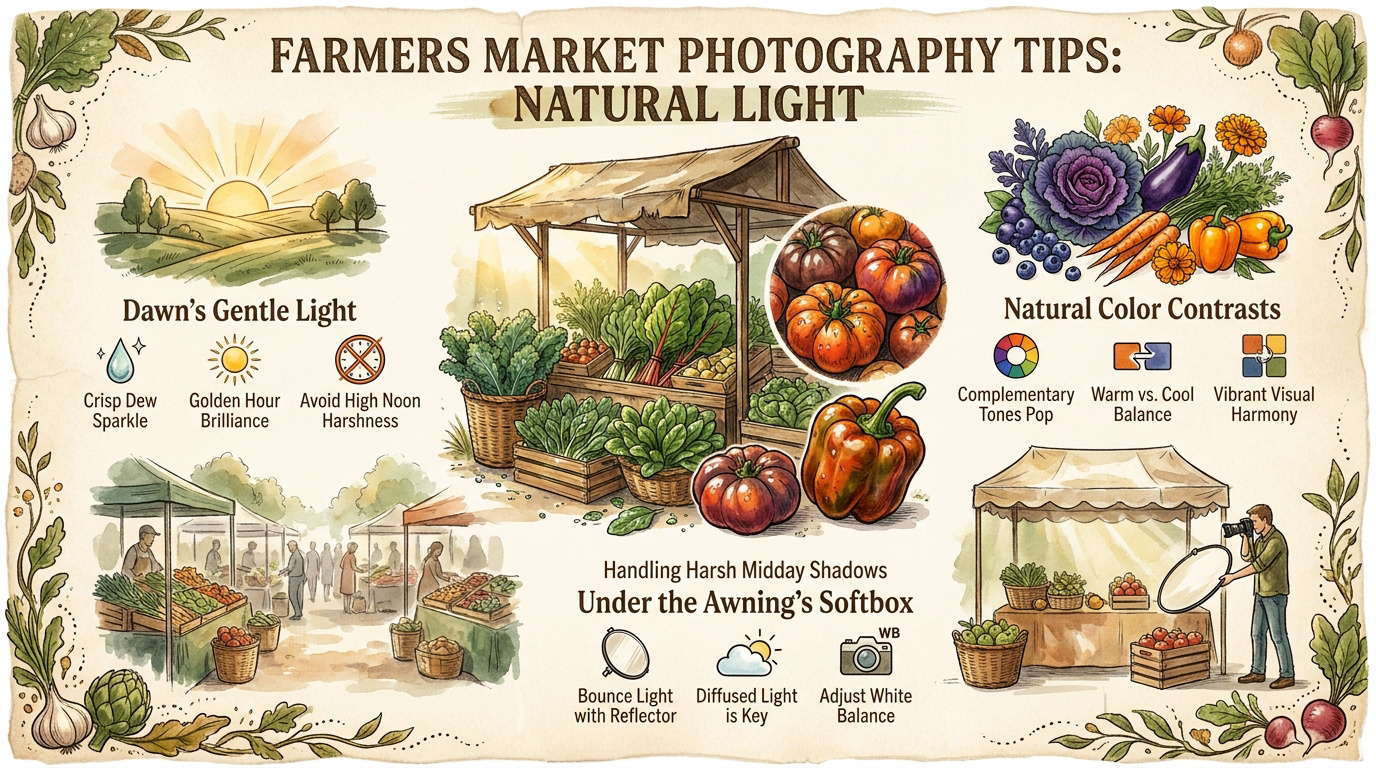
Plan to arrive at dawn. The low sun angle hits the dew on leafy greens. This creates a natural, crisp sparkle on the vegetables.
Position your camera for side-lighting. This technique adds immediate depth and reveals the intricate veins of the leaves.
Avoid shooting at high noon. Harsh vertical light creates flat, unappealing shadows that hide the organic quality of the food.
Color Theory in Floral Displays
Look for natural color contrasts in the stalls. Pair deep purple kale against bright orange carrots. These complementary tones make the image pop instantly. Heirloom varieties offer the best natural saturation for your sensor.
Balance the warm tones of wooden crates. Use the cool greens of the produce to create a visual equilibrium.
Vibrant colors draw the eye. Keep the composition simple to avoid chromatic overload.
Handling Harsh Midday Shadows
Step under the stall awnings for safety. The fabric acts as a massive softbox. This provides even exposure across the cluttered displays.
Use a small white reflector in dark corners. It bounces light back into the shadows. This reveals hidden details in the back of the crates.
Adjust your white balance. Colored tents often cast a strange tint on the food.
3 Technical Settings for Crowded Spaces
While natural light sets the mood, mastering your camera settings is what actually captures the fast-paced energy of the crowd.
Wide Apertures for Subject Isolation
Open your lens to f/1.8 or f/2.8. This narrow depth of field blurs out distracting shoppers. The subject becomes the clear hero of the frame.
Focus strictly on the vendor’s eyes or the product labels. Sharp details in the foreground create professional results.
Background stall lights will turn into soft bokeh. This adds a dreamy atmosphere to the busy environment.
Fast Shutter Speeds for Movement
Set your shutter to at least 1/500s. This speed freezes the rapid hand-to-hand transactions. You can capture the exact moment a coin drops. It also stops motion blur during quick candid shots.
Speed is your best friend here. Don’t let a slow shutter ruin the action.
Watch the vendor’s hands. Anticipate the movement before you press the button.
Auto-ISO for Shifting Light
Enable Auto-ISO to handle the changing light. You will move constantly between bright sun and dark tents. The camera adapts faster than you can.
Set a maximum ISO limit to prevent digital noise. This keeps the images clean and professional looking.
Prioritize your aperture setting for creative control. Let the ISO fill the exposure gap automatically.
How to Handle Messy Backgrounds?
Technical settings help, but sometimes the physical clutter of the market requires a more strategic compositional approach.
Macro Shots of Organic Details
Frame tight on the patterns of romanesco or berries. Fill the entire frame with the product. This eliminates the background noise of the street.
Highlight the tactile quality of artisanal bread crusts. Macro shots emphasize textures that the naked eye misses.
Close-ups tell a story of quality. They remove the chaos and focus on the craftsmanship.
High-Angle Shots for Organization
Shoot from directly above the displays. This perspective turns messy crates into clean geometric grids. It organizes the visual chaos into lines.
Use the repetitive lines of the stalls. These lead the eye toward the main subject of the photo.
Simplify the scene at ground level. A top-down view removes the distracting legs of the passing shoppers.
Using Mobile Apps for Quick Cleanup
Apply subtle contrast boosts to make the produce pop. Use healing tools to remove stray trash or distracting signs. This keeps the focus on the food. Small edits make a big difference in final quality.
Share real-time stories online. This builds engagement with the local community.
Keep the editing natural. Over-processing ruins the authentic market feel.
Human Connections and Ethical Portraits
Beyond the produce and the pixels, the true heart of any market lies in the people who make it happen.
Approaching Vendors for Permission
Start a conversation about the harvest first. Show genuine interest in their work. This builds trust before you even lift the camera.
Offer to send digital copies to the business owners. It is a fair exchange for their time.
Always respect a “no” without hesitation. Maintaining a positive atmosphere is more important than any photo.
Candid Shots of Customer Exchanges
Watch for the moment of shared laughter. These interactions represent the soul of the market. Capture the curiosity of children at the tasting stations.
Keep a respectful distance at all times. Do not break the natural flow of the sale.
Use a longer lens if necessary. This allows you to stay unobtrusive while capturing genuine emotions.
Storytelling Through Hands and Scales
Focus on weathered hands weighing out fruit. Capture the vintage aesthetic of mechanical hanging scales. These details tell a story of tradition. The exchange of cash for goods is a powerful visual hook while Shooting the Farmers Market: Light, Movement and Familiar Faces.
Small details anchor the narrative. They provide a sense of place.
Look for the textures of coins. These tactile elements add grit to the story.
Mastering farmers market photography requires balancing early morning light to enhance produce textures with fast shutter speeds to freeze human movement. By isolating subjects through wide apertures and building ethical connections with vendors, you transform chaotic scenes into vibrant stories. Start capturing these authentic moments today to preserve the soul of your local harvest forever.
FAQ
What is the best time of day to photograph a local farmers market?
To capture the most vibrant textures and rich colors, aim for the golden hour during the early morning or late afternoon. The low angle of the sun at dawn creates a crisp sparkle on leafy greens and provides soft, flattering shadows that highlight the organic quality of the produce.
Arriving early not only offers superior natural light but also allows you to document the authentic hustle of vendors setting up before the harsh midday sun creates flat, unappealing contrasts.
How can I capture sharp images of the movement and busy crowds?
To freeze the fast-paced energy of market transactions, set your shutter speed to at least 1/500s. This high speed is essential for capturing sharp details in moving subjects, such as a vendor’s hands or a customer’s expression, without unwanted motion blur.
If you prefer to convey the bustling atmosphere artistically, try a slower shutter speed (around 1/30s) to create a sense of motion through intentional blur, while keeping your camera stable to maintain the structure of the scene.
What camera settings help isolate subjects in a cluttered market environment?
Using a wide aperture, such as f/1.8 or f/2.8, is the most effective way to handle messy backgrounds. This technical choice creates a shallow depth of field that blurs out distracting shoppers and stalls, turning background lights into soft bokeh and making your primary subject the clear hero.
Additionally, utilizing a lens with a longer focal length can help further isolate specific details or faces, allowing you to create professional portraits that stand out against the surrounding visual chaos.
What is the most ethical way to take portraits of vendors and customers?
Building a human connection is key; always start by engaging in a conversation about the harvest or the products before lifting your camera. Showing genuine interest builds trust, and it is a professional courtesy to ask for permission or offer to share digital copies of the photos with the business owners.
When capturing candid interactions, maintain a respectful distance to avoid interrupting the flow of sales. Always respect a “no” without hesitation, as preserving the positive atmosphere of the market is far more important than any single shot.
How can I use composition to organize the visual chaos of the stalls?
Try adopting a high-angle perspective by shooting from directly above the displays. This top-down view transforms cluttered crates into clean geometric grids and repetitive lines, which helps organize the scene and removes the distracting legs of passing shoppers from the frame.
You can also focus on macro shots to eliminate the background entirely. By filling the frame with the intricate patterns of vegetables or the tactile textures of artisanal bread, you tell a focused story of quality and craftsmanship that bypasses the street noise.
Read next: Shallow Depth of Field in Everyday Scenes: When It Helps and When It Hides