
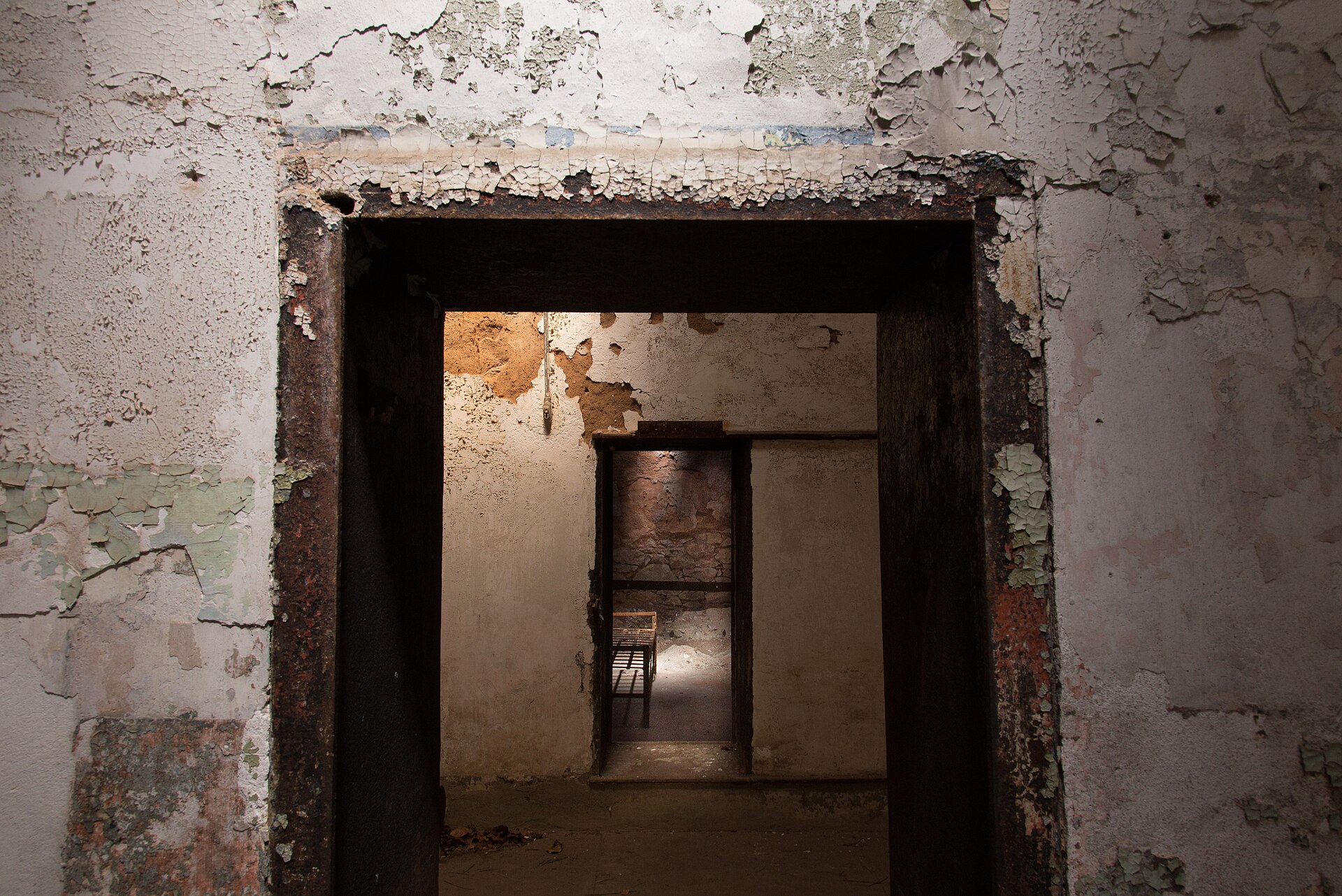
A frame within a frame uses something already in the scene, such as a doorway, a window or an arch, to enclose your subject a second time. It pulls the eye toward one spot, adds a sense of depth, and works best when the opening says something about the subject rather than just decorating the edges.
What does a frame within a frame actually do?
The idea is simple. Something inside the scene forms a second border around your subject, and the viewer reads that inner rectangle first. That is why the technique can isolate a person from a busy street or give a flat scene a front layer, a middle layer and a back layer.
It also changes how the picture is read. A figure seen through a window feels watched or kept apart. A figure standing inside an arch can feel held or sheltered. The same opening can suggest very different things depending on who is in it and which side of the glass you are standing on.
That is the main decision to make before you raise the camera: what do you want the inner frame to say? If you cannot answer that, the opening is probably just an obstacle in the foreground.
How is this different from simply framing a shot?
Ordinary framing is about where you place the subject inside the rectangle of your viewfinder. A frame within a frame adds a second, physical border that exists in the scene itself. Your own crop is still there, and the doorway or arch sits inside it.
Here is a quick test. If you removed the opening and the picture lost its meaning, the technique is doing real work. If you removed it and the picture lost only a bit of decoration, you were probably just shooting through a hole.
- Simple framing: you choose the crop, the edges are the camera’s.
- Frame within a frame: the scene supplies a second border that you align with and use.
- Loose natural framing: branches or leaves at the edge of the picture give a soft vignette but no clear inner shape.
Loose natural framing is a gray area. Branches in the foreground can lead the eye to a distant subject, though they rarely form a clean enclosed shape, so treat them as a related tool and not a true inner frame.
Which everyday openings in a small town work best?
In a place like Collierville, the useful frames are the ordinary ones you walk past daily. Look for openings with clear edges and a distinct difference between the space around them and the space inside.
- Storefront doorways and windows on the town square: a shopkeeper at a counter or a customer at the glass sits neatly inside a rectangle, and the glass itself adds reflections you can use or avoid.
- Porch columns and rails: two columns and a beam make a wide frame for someone on a porch, a dog on the steps or a swing in motion.
- Market stalls: the poles and awning of a stall create a frame around a vendor and their produce, and the stall’s shaded interior often contrasts with bright light outside.
- Arches, gates and breezeways: these give a clean tunnel that leads into a brighter space beyond.
- Tree canopies: overhanging branches act as a rough, organic frame for a path or a street scene.
Walk the area once without photographing, simply noting which openings have good edges and which side the light falls on. Return when someone is likely to stand or pass there.
How do you set one up: position, light and focus?
Start with the camera position. An opening seen at an angle becomes a distorted shape, so square yourself to it when you want a clean rectangle. Step back or sideways until the edges run parallel to your frame, then check that nothing awkward is cutting through the corners.
Next, think about exposure. The inner space is usually brighter or darker than the frame around it. If you want the viewer to travel through the opening, expose for what is inside and let the surrounding wall fall darker. That contrast does half the work of pulling the eye in.
Then place the subject. Dead center feels formal and calm. Off to one side feels more candid, and it lets the inner frame show a bit of its own structure. A subject in the middle of a window is not always the best choice, since a slightly off-center position can look more natural, as long as the frame still reads clearly.
Decide what must be sharp. If both the opening and the subject matter, you need enough depth of field to hold them together. If the frame is only a soft foreground, let it blur and keep focus on the person. Either choice works as long as you make it on purpose.
- Square the camera to the opening for clean edges.
- Expose for the space you want the eye to enter.
- Check corners for clutter before pressing the shutter.
- Wait for the subject to settle into the opening, since timing matters more than gear.
35mm or 85mm: which lens suits this technique?
Neither is correct in every case. They simply produce different results, and the right one depends on how much of the surrounding scene you want to keep.
A 35mm view
A wider lens includes more of the opening and the space around it. It suits storefronts, porches and market stalls where the frame itself is part of the story. You will usually stand fairly close to the opening, which makes the nearby edges loom larger and adds a stronger sense of depth. The trade-off is more clutter at the edges, so check them carefully.
An 85mm view
A longer lens compresses distance and lets you stand farther back. It isolates a subject through a small opening and tends to flatten the layers, which can make the inner frame feel tighter and more graphic. It also lets you photograph people at a comfortable distance without crowding them, which matters when you are working among neighbors.
If you are unsure, choose the lens by asking whether you want the viewer to notice the place or the person first. Wide favors the place. Longer favors the person. Walking a few steps closer or farther can often do the same job as a lens change.
When does it add meaning, and when is it a cliché?
The technique earns its place when the barrier or threshold matters to the subject. A shopkeeper behind glass, a child waiting in a doorway, or an older neighbor at a porch rail all have a real relationship to the opening around them. The frame carries information that the picture would lose without it.
It becomes a cliché when the opening is only a device. A person is dropped into a random arch because arches look good, or every picture in a set uses a door, and the viewer stops seeing the subject and starts seeing the habit. Filmmakers face the same warning: a door in a shot adds nothing unless it supports the story being told.
A few questions help you check yourself:
- Does the opening relate to what the person is doing or feeling?
- Would the picture still hold attention without the frame?
- Have you used this device in your last several pictures?
If the answers point toward decoration, try the same scene without the inner frame, or find a different angle. Using the technique sparingly keeps it effective when you do reach for it.
Frequently asked questions
Does a frame within a frame need to be a door or window?
No. Any shape that encloses the subject can serve, including arches, porch columns, fences, tree branches and market stall poles. A clean, closed shape reads more strongly than a loose or partial one.
Should the subject be centered inside the opening?
Centering feels formal and balanced, while placing the subject slightly off-center can feel more natural. Either works as long as the inner frame is still clear and the subject is not crowded by the edges.
How do I avoid reflections when shooting through a window?
Move until the reflection leaves the part of the glass that covers your subject, or shift your angle slightly. Standing close to the glass and shading it with your body or a hand can also reduce unwanted glare.
Can I use this technique with people I do not know?
Yes, but be respectful. A longer lens lets you keep a comfortable distance, and it is good practice to talk with anyone you photograph closely, especially if they notice you and look uneasy.
Related reading
- Long Exposure Photography in a Small Town: Slowing Down to See More
- Shallow Depth of Field in Everyday Scenes: When It Helps and When It Hides
Sources
- How Paul Thomas Anderson Creates Frames Within Frames (premiumbeat.com, accessed 2026-11-23)
Photo: Frame within a Frame (17172861300), by Danny Fowler from Washington, DC, USA, CC BY-SA 2.0 (Wikimedia Commons)